
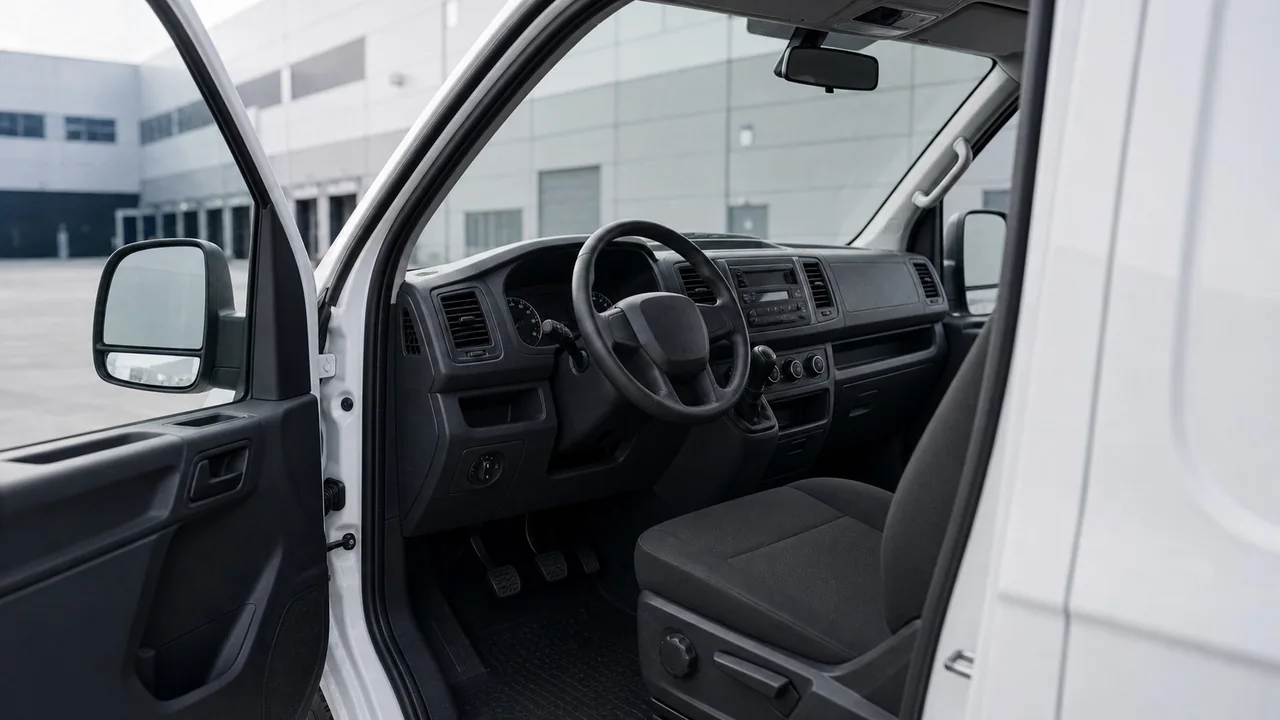
Tachographs in vans from 1 July 2026 — what it means for shippers
From 1 July 2026 the smart tachograph obligation covers 2.5–3.5 t vehicles in international transport. We explain who is affected and what it means for your deliveries.
On 1 July 2026, a change came into force that is worth knowing not only for carriers but also for the companies that commission transport. The obligation to use second-generation smart tachographs has been extended to vehicles with a gross vehicle weight of 2.5 to 3.5 tonnes performing international road freight. Until recently, vans and light delivery vehicles were largely outside this regime.
Who is actually affected
The new rules cover transport vans, light delivery vehicles, courier vehicles in international traffic and vehicle-and-trailer combinations whose combined GVW exceeds 2.5 tonnes. Importantly, cabotage is also covered — transport within a single EU country carried out by a haulier based in another country. Purely domestic transport is not the main target of these changes, although their scope may be widened in the future.
What has changed in practice
Drivers of light vehicles must now observe working-time rules just like in heavy transport: maximum daily driving time, mandatory breaks and daily and weekly rest periods, and they must use a driver card. For the company it is not just about fitting the device — calibration and certification, a company card, downloading and archiving data, driver training and working-time settlement procedures are all added. Adapting a single fleet can cost from a few to several tens of thousands of złoty, although these expenses can usually be treated as tax-deductible.
For a missing tachograph or working-time breaches, penalties may fall on both the operator and the driver — in extreme cases including temporary immobilisation of the vehicle until the irregularities are resolved.
Our view — why this matters to you too
At TQM we organise transport based on vetted carriers, so we look at these changes from the perspective of delivery reliability. If your load travels by a light vehicle on an international route, the key question today is simple: is the carrier already fully compliant? A vehicle stopped at a check for lacking a tachograph is not an abstract regulatory problem — it is your delayed delivery and a risk to your supply chain.
That is why we verified our partners’ fleet readiness early and plan orders so that the rules do not translate into downtime. In the first weeks the new rules applied, the industry saw a spike in orders for installation and certification — hauliers who delayed are facing queues and the risk of vehicles being temporarily withdrawn from service. Today the question is no longer “will they make it in time”, but “who to ship with to keep moving without risk”.
Do you have loads travelling by van on international routes and want certainty they will run in line with the applicable rules? Get in touch — we will help select a carrier and plan the transport without surprises.
Factual basis: Podatnik.info — “New obligations for drivers and transport companies from 1 July 2026”. Commentary and practical conclusions: the TQM team.